
· Dax · Dialect Guide
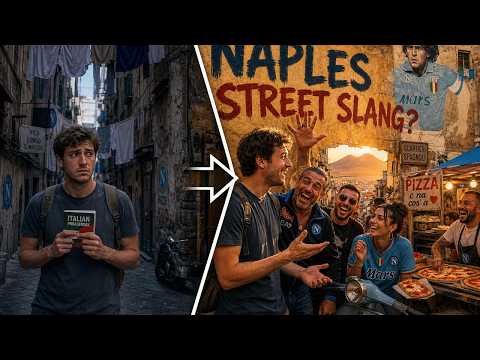
Naples Slang Guide: The Neapolitan Italian You Actually Hear on the Street
Ué, uagliò, jamme ja. The Naples words and sounds your Italian course skipped, and how to use them without sounding like a tourist.
Spanish in Mexico City is not the Spanish you get from a textbook, and it is not the Spanish you get in Madrid or Buenos Aires either. The same is true for every language on this list: what people actually say on the street changes by city, sometimes more than it changes by country.
These guides break down that street level dialect city by city. Vocabulary that shows up in real conversation but never makes it into a phrasebook. Pronunciation patterns that mark you as someone who learned the language somewhere else. The cultural context that tells you when a phrase is warm and when the same phrase is rude.
Right now that covers 24 cities across 9 languages: CDMX, Guadalajara, Mérida, Barcelona, and Santiago Spanish, Parisian and Québécois French, Milanese, Romanesco, and Neapolitan Italian, Tokyo and Osaka Japanese, Berlin and Munich German, Lisbon, Porto, São Paulo, and Rio Portuguese, Bangkok Thai, Istanbul Turkish, and Seoul Korean. Each guide pairs directly with the full phrase library, pronunciation scoring, and cultural notes inside the app for that specific city.
If you already know which city you are headed to, start there. If you are comparing two cities in the same language, the Comparison guides go deeper on exactly what changes between them.
Ué, uagliò, jamme ja. The Naples words and sounds your Italian course skipped, and how to use them without sounding like a tourist.

Chilean Spanish is fast, clipped, and full of words no class teaches. Here are the Santiago phrases you will hear on day one, from cachai to al tiro.

Yucatecan Spanish shares most of its grammar with Mexico City Spanish but sounds nothing like it out loud, and the main square is not the Zócalo. Here is what people actually say on the streets of Mérida.
Guadalajara Spanish shares Mexico City vocabulary but sounds nothing like it out loud. Here is what people actually say on the streets of Guadalajara.

Standard Korean textbooks won't prepare you for Seoul. This guide covers the real phrases, register rules, and slang that locals actually use.

Romanesco is not textbook Italian. This guide covers the real phrases, sounds, and slang you will hear on the streets of Rome.

Milan does not sound like Rome or Florence. This guide covers the dialect words, clipped rhythms, and unwritten rules you need before you arrive.
Québécois French sounds nothing like what you learned in class. This guide covers the words, sounds, and phrases that actually run Montreal street life.
Porteño Spanish sounds like nowhere else in Latin America. Here is what makes it unique and the phrases you need before you arrive.

Istanbul Turkish is the standard dialect, but street speech moves fast and runs on cultural vocabulary no textbook covers. Here is what you actually need.

You learned textbook French. You can order a croissant and ask for directions. Then someone in Paris says "c'est chelou" and "je kiffe trop ça" and the conversation vanishes entirely. Here is what Parisian French actually sounds like.
Bangkok Thai is tonal, script-based, and unlike any European language. Here is what you actually need to communicate once you land.

Paisa Spanish is warm, melodic, and full of words you will never find in a textbook. Here is what people actually say on the streets of Medellín.
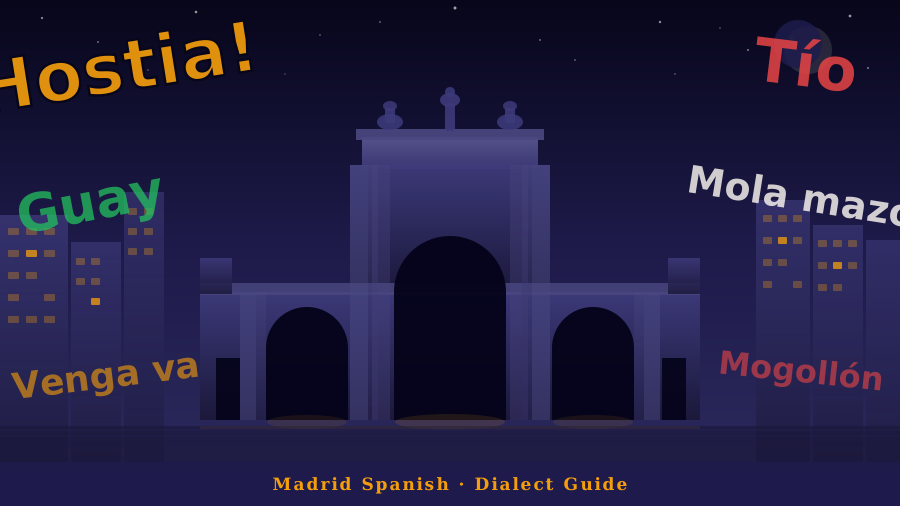
You studied Spanish. You can hold a conversation. Then you land in Madrid and people start saying things like "mola mazo" and "estoy flipando" and none of it makes sense. Here is what you actually need to know.
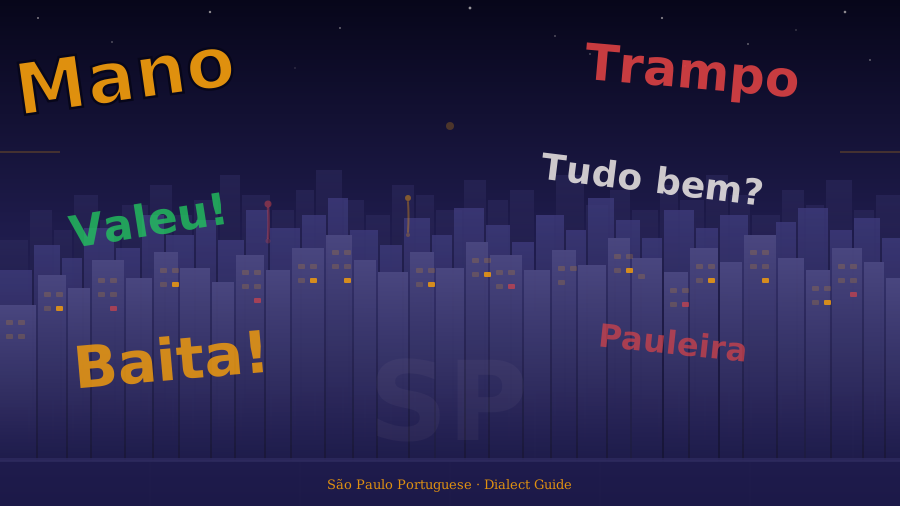
Paulistano Portuguese is fast, direct, and shaped by a century of Italian and Japanese immigration. Here is what you actually need to speak like someone who lives in SP, not someone who downloaded an app.